Battery Optimization Tactics Extending Mobile Sessions Toward Tiered Rewards in Card and Event Platforms
Written by Logan Carter · Jun 14, 2026
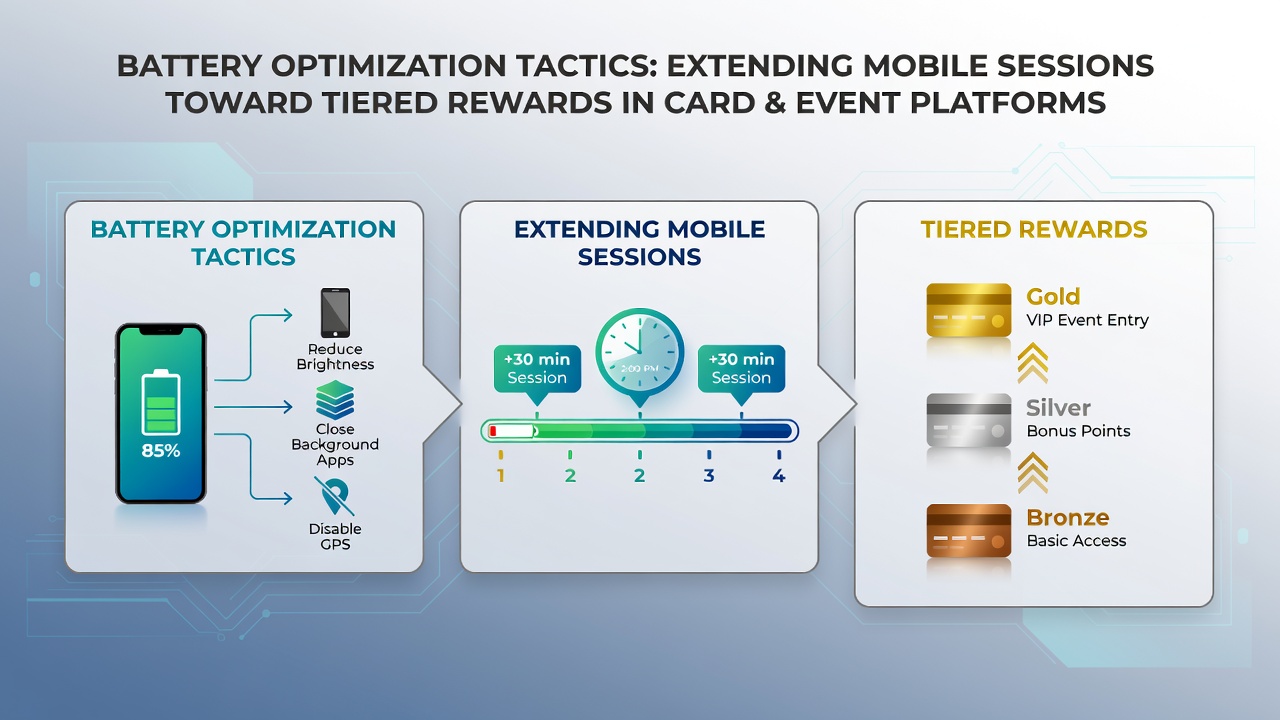
Battery Optimization Tactics Extending Mobile Sessions Toward Tiered Rewards in Card and Event Platforms
Platforms that host card games and live event wagering have seen session lengths increase when users apply battery management features on their devices, and those extended periods often translate directly into progress through loyalty tiers. Operators track playtime metrics across handheld applications, where prolonged engagement unlocks escalating rewards such as bonus credits, exclusive table access, and priority event entries.
Device manufacturers report that screen brightness, background processes, and network activity account for the majority of power consumption during interactive sessions, while users who adjust these elements maintain connectivity longer without interruptions. Data from industry reports indicate that average session duration on optimized devices rises by measurable percentages compared with default settings, allowing participants to accumulate the activity thresholds required for tier advancement.
Common Power Consumption Patterns in Gaming Applications
Card platforms and event betting interfaces rely on continuous data streams for real-time updates, dealer interactions, and odds calculations, which keeps radios and processors active throughout each session. Research compiled by the European Gaming and Betting Association shows that video rendering for live dealer feeds and dynamic odds boards draws significant resources, yet users who enable adaptive refresh rates experience reduced drain while preserving visual quality.
Notifications from multiple applications compete for attention and power, and those who consolidate alerts or schedule them during non-play periods preserve battery capacity for core activities. Observers note that devices running the latest operating system versions incorporate automatic throttling that responds to detected usage patterns, shifting resources toward foreground applications such as card tables or event dashboards.
Practical Adjustment Methods That Support Longer Engagement
Lowering display brightness to levels between 30 and 50 percent, combined with enabling dark mode interfaces provided by most platforms, produces immediate reductions in power draw without compromising readability during evening sessions. Users also close unused browser tabs and disable location services outside active events, which prevents constant GPS polling from competing with game engines.
Wireless connectivity choices matter as well, since switching between cellular and Wi-Fi networks at appropriate times minimizes handoff overhead, and platforms that cache static elements like rule descriptions or past hand histories further decrease repeated data requests. Those who activate battery saver modes midway through sessions often report uninterrupted play that continues until reward thresholds are reached.
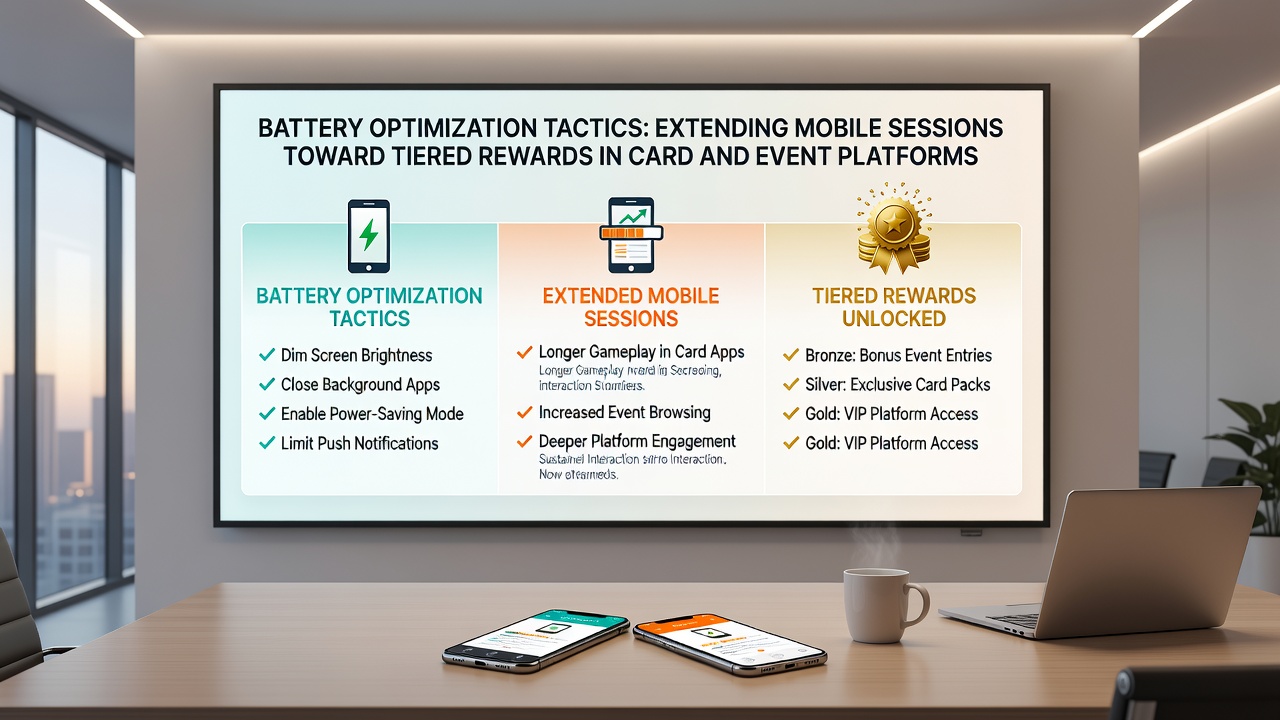
Linkages Between Session Duration and Loyalty Progression
Tier systems in these environments award points based on cumulative playtime and wager volume, so extended sessions achieved through power management contribute directly to status elevation. Participants who maintain stable connections across multiple hours accumulate the metrics tracked by algorithms that determine when bronze, silver, or gold levels activate, unlocking corresponding benefits such as reduced rake or enhanced event odds.
Platform developers integrate usage analytics that correlate device performance reports with player retention data, revealing patterns where optimized sessions lead to higher completion rates of daily or weekly challenges. Figures released in June 2026 from several North American operators confirm that players employing systematic battery adjustments show elevated progression speeds through the reward structure compared with those experiencing early device shutdowns.
Platform Features That Complement Device Settings
Application developers have introduced in-app toggles for reduced animation and compressed graphics that align with device-level power conservation, allowing seamless transitions between high-fidelity and efficiency modes. Push notification schedules can be customized within the platform settings, limiting background activity while still delivering timely event alerts.
Some interfaces provide estimated session endurance indicators based on current battery percentage and historical consumption rates, helping users plan their participation windows to coincide with upcoming card tournaments or sporting events. These tools operate alongside operating system features, creating layered approaches that extend viable play periods.
Regional Observations and Usage Trends
Regulatory bodies in Canada and Australia have documented rising mobile participation rates in card and event categories, with battery-related continuity cited as a contributing factor in sustained engagement statistics. Operators in these markets report that users who combine device optimizations with platform tools reach higher tiers at faster intervals, particularly during peak periods around major athletic calendars.
Cross-platform compatibility remains a focus, since operating system differences between major providers affect how aggressively background tasks are managed, yet standardized APIs allow developers to deliver consistent experiences regardless of hardware. Data streams connecting athletic wagers with virtual dealer sessions continue to benefit from these efficiencies, as stable connections support the layered reward mechanisms that encourage repeated logins.
Conclusion
Battery optimization tactics provide measurable extensions to mobile sessions on card and event platforms, directly influencing the rate at which users advance through tiered reward structures. Adjustments to display, connectivity, and application settings work in tandem with platform features that track and incentivize continued participation, creating pathways from initial engagement to elevated status levels. Current data through June 2026 underscores these connections across multiple markets and device ecosystems.