Bonus Structures Fueling Crossovers from Poker Rooms to Live Dealer Experiences on Smartphones
Written by Noah Schmitt · Jun 3, 2026

Bonus Structures Fueling Crossovers from Poker Rooms to Live Dealer Experiences on Smartphones
Operators across multiple jurisdictions have refined bonus mechanisms that link poker room activity directly to live dealer sessions on mobile devices, and these structures have gained traction as smartphone penetration in gaming markets reached new levels by June 2026. Data compiled by regional gaming bodies shows measurable shifts in session patterns where players move from multi-table poker formats to streamed table games after meeting specific wagering thresholds tied to promotional credits.
How Layered Incentives Bridge the Two Formats
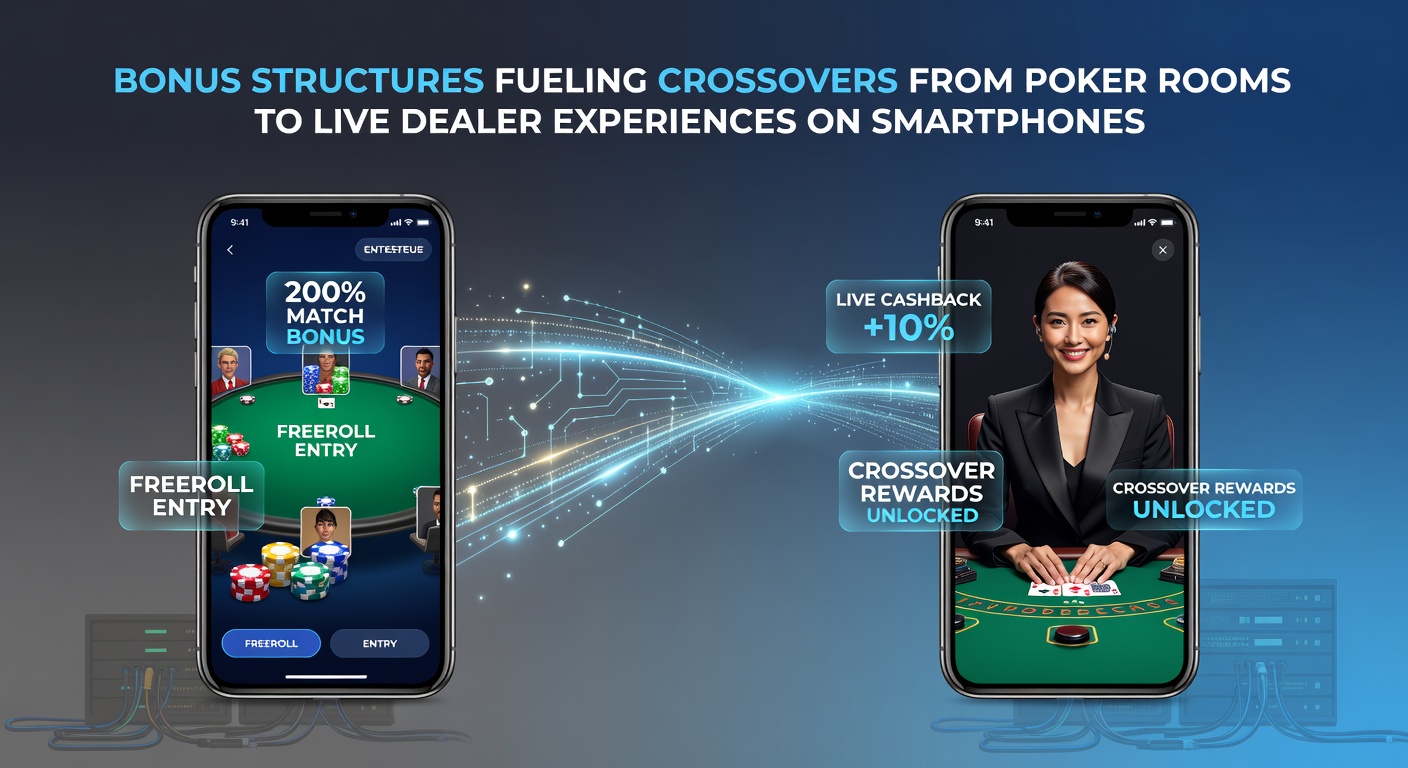
Many platforms structure their rewards so that rake generated in poker rooms converts into credits usable at live dealer tables, while separate deposit-match offers activate only after a player completes a set number of hands on the poker side first. This sequencing encourages cross-format exploration without requiring separate funding steps, and figures from industry tracking services reveal that accounts engaging both products within a single app session increased notably during the first half of 2026. Loyalty point multipliers apply across both verticals once a crossover threshold is hit, turning what used to be siloed progress bars into unified tier advancement systems.
Mobile-Specific Mechanics Driving Participation
Smartphone applications display real-time prompts that highlight available live dealer tables immediately after a poker cash-out or tournament finish, often bundling the transition with a time-limited chip boost. Push notifications triggered by location data or time-of-day patterns further route users toward live dealer lobbies where minimum bet requirements align with recently earned bonus funds. Research conducted by academic groups in Australia indicates that these in-app pathways reduce friction compared with desktop flows, resulting in higher completion rates for the bonus cycles that span both poker and live formats.
Regional Regulatory Context and Market Data
Canadian provincial regulators have documented similar patterns in their quarterly reports, noting that platforms operating under provincial licenses recorded elevated crossover volumes once bonus portability rules were clarified in early 2026. Those reports link the rise to standardized responsible gaming disclosures that must accompany any promotion spanning multiple game types. In parallel, data released by the Australian Gambling Research Centre shows that players who begin on poker modules and move to live dealer streams exhibit longer overall engagement windows on mobile, though average session length per format remains shorter than dedicated single-product users.
One operator in a regulated European market introduced a hybrid rake-and-stream bonus that awards incremental live dealer free bets scaled to poker volume, and internal metrics shared with industry analysts indicated the program lifted live dealer mobile traffic by double-digit percentages within three months of launch. Observers note that such programs typically cap the transferable value at a fixed percentage of rake paid, which keeps the structure compliant with local advertising standards while still creating a clear incentive path.
Player Progression and Loyalty Integration
Unified loyalty schemes now treat poker and live dealer play as interchangeable inputs toward tier status, so that a player grinding sit-and-gos on a commute can unlock higher live dealer table limits or exclusive streamed tournaments by evening. This parity removes the need to maintain separate point balances and has been credited by several operators with smoothing retention curves across the two verticals. According to a report published by the Canadian Gaming Association, accounts that accumulated points through both formats showed lower dormancy rates at the six-month mark compared with single-format cohorts.
Bonus wagering requirements attached to crossover offers frequently include a clause that credits earned from poker must be deployed at live dealer tables within a defined window, typically 48 to 72 hours, to prevent indefinite rollover accumulation. These time-bound rules appear in the terms of multiple major platforms and align with broader efforts to maintain clear audit trails for promotional liability. Industry organizations tracking mobile engagement have recorded that the majority of qualifying players complete the requirement on the same device they used for the originating poker activity, underscoring the role of smartphone interfaces in closing the loop.
Conclusion
Bonus architectures that explicitly connect poker room output to live dealer access on smartphones continue to evolve in step with regulatory updates and device capabilities. Figures released through mid-2026 demonstrate consistent uptake across licensed markets, driven by portable credits, unified loyalty mechanics, and in-app routing features. Operators maintain these systems under the same compliance frameworks applied to all promotional activity, with reporting obligations extending to both formats involved in any crossover offer. As mobile infrastructure expands, the technical pathways supporting these transitions are expected to incorporate additional real-time elements while remaining subject to existing oversight structures.