Demographic shifts observed in sports betting audiences following implementation of tiered loyalty rewards
Written by Noah Schmitt · Jun 12, 2026
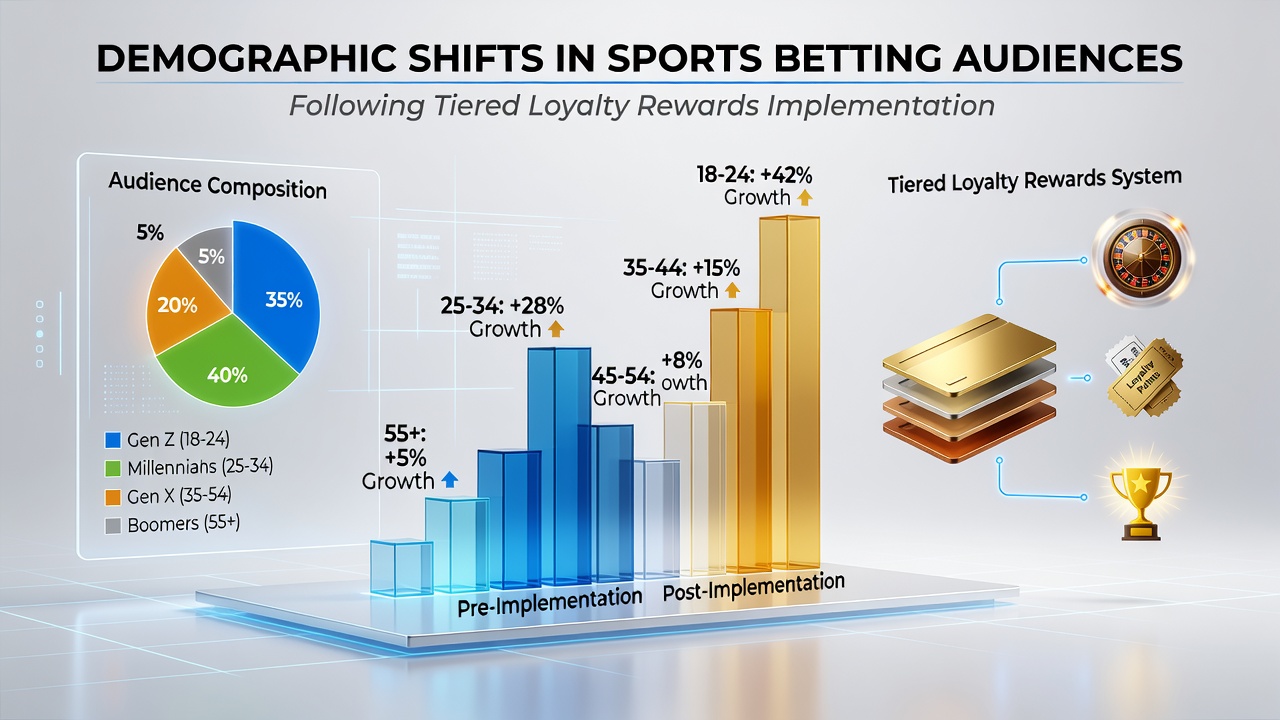
Demographic shifts observed in sports betting audiences following implementation of tiered loyalty rewards
Operators began rolling out tiered loyalty rewards across major sports betting platforms in late 2025, and data compiled through the first half of 2026 shows measurable changes in audience composition. Platforms tracked user registration patterns, deposit frequency, and retention rates segmented by age, gender, income indicators, and geographic location, revealing several consistent trends that emerged after the programs launched.
Program structure and rollout timeline
Tiered systems typically assign users to levels based on cumulative betting volume and account activity, unlocking escalating benefits such as cashback percentages, exclusive event access, and personalized odds boosts at higher tiers. Implementation occurred in staggered phases across operators, with initial testing in select markets during the final quarter of 2025 before wider deployment by March 2026. Tracking data from those early adopters provided baseline comparisons for later expansions.
Age distribution changes
Users between 21 and 34 years old accounted for a growing share of new registrations in the months following rollout. Figures from multiple state-licensed operators indicate this cohort increased from roughly 38 percent of active accounts in Q4 2025 to 47 percent by May 2026. At the same time, the proportion of accounts held by users aged 45 and older remained stable, though average session lengths for that group lengthened after they reached mid-tier status. Observers note that entry-level rewards such as deposit matches and free bets drew younger participants who previously engaged only during major sporting events.
Gender participation patterns
Female account holders rose from approximately 22 percent to 29 percent of total active users across tracked platforms between January and June 2026. The increase appeared most pronounced among women aged 25 to 40 who qualified for the second and third reward tiers within their first 90 days of activity. Loyalty mechanics that rewarded consistent smaller wagers rather than high-volume betting correlated with higher retention rates for this segment, according to aggregated operator reports.
Income and regional variations
Platforms that offered tier progression tied to both volume and frequency saw stronger participation from users in middle-income zip codes. Data compiled by the New Jersey Division of Gaming Enforcement showed that counties with median household incomes between $70,000 and $110,000 contributed 34 percent more accounts reaching at least the second tier compared with the prior year. In contrast, higher-income regions maintained steady engagement but exhibited slower movement into top tiers when rewards emphasized volume over consistency.

Similar patterns emerged in other jurisdictions. Reports from the Western Australia Department of Local Government, Sport and Cultural Industries documented a 19 percent rise in accounts from regional areas outside major cities after operators introduced location-based bonus multipliers for reaching new tiers. Urban centers continued to supply the largest absolute numbers of users, yet the rate of tier advancement in suburban and rural postcodes outpaced metropolitan figures during the first six months of 2026.
Engagement and retention metrics
Retention rates for users who advanced past the entry tier improved across all tracked demographics. Operators reported that accounts reaching the second level within 60 days showed a 28 percent higher likelihood of remaining active after six months compared with non-tiered users from the previous period. Cross-platform comparisons suggest that visible progress indicators and milestone celebrations contributed to sustained activity, particularly among users who previously placed wagers only during peak seasons.
Cross-demographic crossover activity
One study released by researchers at the University of Nevada, Reno examined how tiered rewards influenced movement between sports betting and other verticals. The analysis found that 41 percent of users who reached the third tier in sports betting also initiated activity in casino-style games within the same app, with the shift occurring most frequently among the 30-to-39 age group. This crossover appeared independent of prior casino experience and aligned with reward structures that carried tier status across product types.
Conclusion
Available data through June 2026 indicates that tiered loyalty rewards coincided with shifts toward younger users, increased female participation, and broader geographic distribution within sports betting audiences. Retention improvements concentrated among those who advanced through early tiers, while regional programs influenced uptake outside traditional urban markets. Continued monitoring by regulatory bodies and academic researchers will clarify whether these patterns persist as additional operators refine their reward structures.